

'%20d='m0%200%2016%2011h61%2061%2061%2061%2060L47%2037h61%2061%2060%2061L16%2063h61%2061%2061%2061%2060L47%2089h61%2061%2060%2061L16%20115h61%2061%2061%2061%2060L47%20141h61%2061%2060%2061L16%20166h61%2061%2061%2061%2060L47%20192h61%2061%2060%2061L16%20218h61%2061%2061%2061%2060z'/%3e%3c/svg%3e)



Why Is My Dog Chewing Everything? A Guide by Age, Plus Safe and Risky Chews
Chewing is normal at every age, but the reasons change. Here's what's behind it for puppies, teenagers and adult dogs, what actually helps, and which chews can crack a tooth.
This article is general information, not veterinary advice. If your pet seems unwell or you are worried, call your vet.
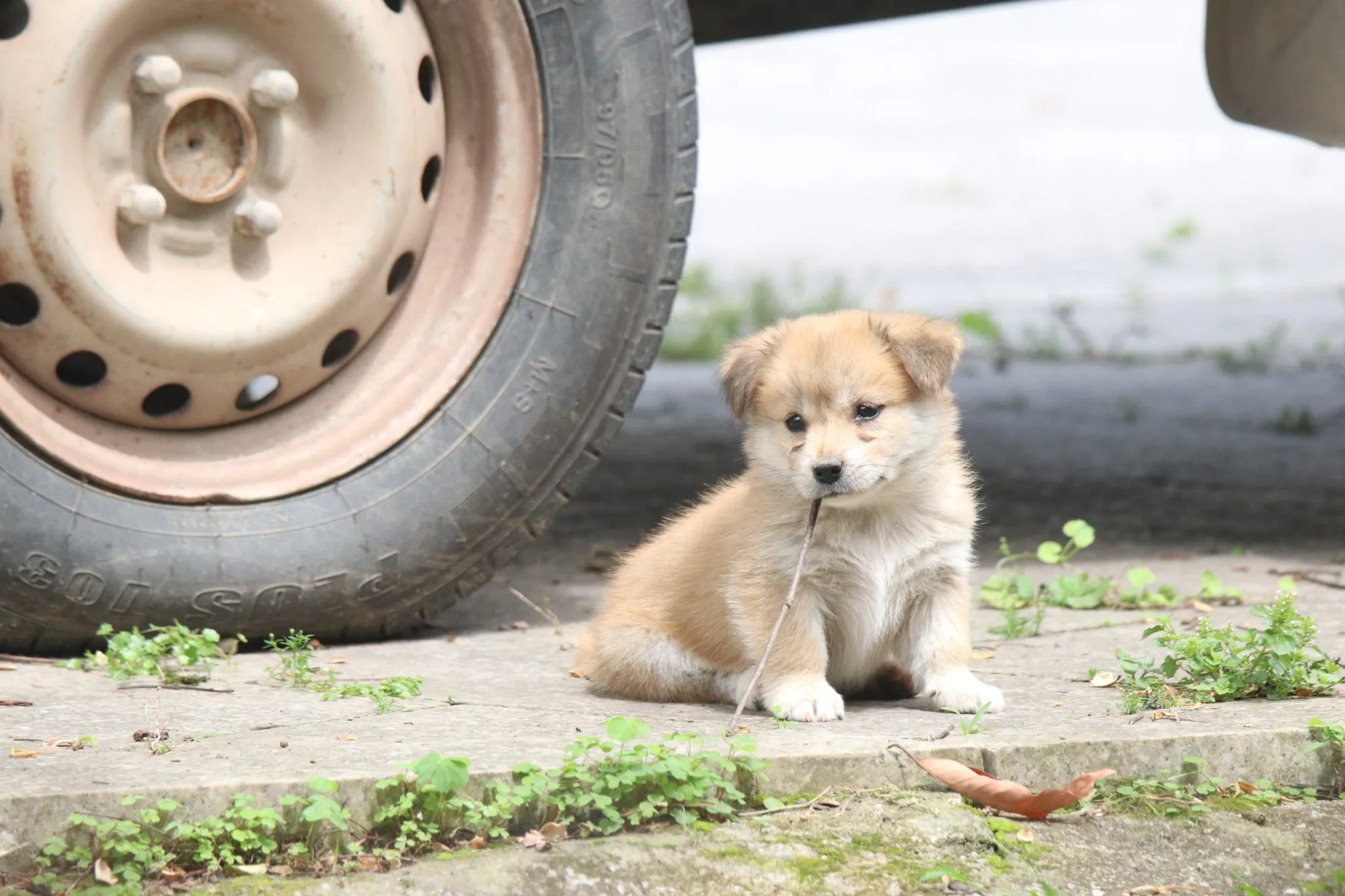
Chewed shoes, gnawed chair legs, a sofa cushion turned inside out. If you live with a dog who chews everything, it can feel personal. It isn’t. Chewing is a normal, healthy dog behaviour at every age.
The goal isn’t to stop your dog from chewing. It’s to understand why they’re chewing right now, and then point that need at something safe.
Why dogs chew
Dogs explore the world with their mouths, the way toddlers use their hands. Chewing also:
- Eases teething discomfort in puppies
- Burns off physical and mental energy
- Helps many dogs relax and settle
- Keeps jaws strong and helps scrape some debris off teeth
- Simply feels good
Problems start when there’s more need than there are good outlets. The reasons shift as your dog grows, so it helps to look at it by age.
Chewing by age
Puppies (roughly 8 weeks to 6 months)
Puppies have 28 baby teeth, which fall out between about 3 and 6 months as 42 adult teeth come in. During this stretch, gums can be sore and chewing brings relief. Puppies are also learning what’s edible, what’s fun and what’s off-limits, and they only learn that through their mouths.
What helps: puppy-proof the house, use gates or a pen when you can’t watch, and offer a few different textures. Many puppies like something cold on sore gums, such as a chilled rubber toy or a damp, frozen washcloth (supervised, and taken away if it starts to tear).
Adolescents (roughly 6 to 18 months)
This is often the most destructive phase. Adult teeth are in, jaws are stronger, and adolescent dogs have big energy, short attention spans and a habit of testing limits. Many owners see a second wave of chewing after teething seems over.
What helps: more structured activity, not just more walks. Sniffing games, short training sessions and food-based puzzles tire the brain. Keep management in place a little longer than you think you need to.
Adult dogs
Adult dogs who chew destructively are usually telling you something. Common reasons:
- Boredom or under-stimulation, especially for working and sporting breeds
- Not enough exercise for their age and breed
- Stress or change, like a move, a new baby or a new schedule
- Distress when left alone, which can look like chewing at doors and windows
- Hunger, if they’re on a strict diet
- Pain, including dental pain
A senior dog who suddenly starts chewing is worth a vet visit. New habits in older dogs can be linked to dental problems, discomfort or age-related changes.
What to do about destructive chewing
- Manage the space. Put shoes, cables, kids’ toys and remotes away. Use gates, a pen or a crate your dog is comfortable in when you can’t supervise. Every chewed shoe is practice.
- Give better options. Keep two or three appropriate chews available and rotate them every few days so they stay interesting.
- Trade, don’t chase. If your dog grabs something they shouldn’t, offer a treat or a toy in exchange. Chasing turns it into a game.
- Redirect calmly. Catch them in the act, interrupt with a cheerful sound, and hand over something allowed. Praise them when they chew it.
- Meet the underlying need. Add sniff walks, food puzzles and training. A tired brain chews less.
- Use taste deterrents only as a backup. Bitter sprays can protect furniture legs, but they don’t teach anything on their own.
- Skip punishment. Scolding after the fact doesn’t connect to the chewing and can make a dog sneakier or more anxious.
Safe vs risky chews
No chew is risk-free, so supervision matters with anything new. As a general guide:
| Generally safer choices | Higher-risk choices |
|---|---|
| Firm rubber toys with some give, sized for your dog | Cooked bones of any kind (they splinter) |
| Rubber toys stuffed with soft food, plain or frozen | Antlers, hooves and very hard bones |
| Lick mats with a thin layer of soft food | Very hard nylon or plastic chews |
| Edible dental chews sized for your dog’s weight | Rawhide, if your dog swallows large pieces |
| Food puzzles and treat-dispensing toys | Sticks, stones and small balls |
The tooth fracture problem
Very hard chews are one of the most common causes of broken teeth in dogs. The big upper chewing tooth near the back of the mouth (the upper fourth premolar) is especially prone to “slab” fractures, where a piece of the outer surface shears off. These breaks are painful, can expose the nerve, and often need extraction or a root canal.
Use the fingernail test: if you can’t make a small dent in a chew with your fingernail, it’s probably too hard. Same goes for anything that would hurt if you tapped it on your kneecap.
Size and condition matter
- Choose chews too big to fit fully in your dog’s mouth or be swallowed whole.
- Throw out chews that have been worn down small enough to swallow.
- Replace rubber toys that are cracked or missing chunks.
- Supervise with any edible chew, and take it away when it gets small.
When to call the vet
Book a vet visit if you notice:
- A broken, chipped or discolored tooth, or bleeding from the mouth
- Drooling, pawing at the mouth, chewing on one side, or dropping food
- Bad breath that’s new or getting worse
- Sudden new chewing in an adult or senior dog
- Eating non-food items like rocks, socks or fabric (this is called pica and can have medical causes)
Go straight to a vet or emergency clinic if you think your dog has swallowed something they shouldn’t, especially with vomiting, not eating, a painful belly, straining to poop, or lethargy.
When to call a behaviour professional
Get help from a veterinary behaviourist or a certified behaviour consultant if:
- Chewing happens mainly when your dog is left alone, especially at doors and windows
- Your dog is hurting themselves, like broken nails or damaged gums from chewing crates or doors
- The chewing comes with other signs of distress, like howling, house soiling or panting when you leave
- Your dog guards chews and growls or snaps when you come near
These are signs the chewing may be about stress, not boredom, and they respond best to a tailored plan.
The bottom line
Your dog isn’t chewing to spite you. They’re meeting a real need, and the right mix of management, safe chews and daily brain work usually brings it under control. Choose chews with a little give, size them generously, retire them when they wear down, and talk to your vet about anything that looks like pain or a broken tooth.
Questions people ask
Most puppies lose their baby teeth between about 3 and 6 months, and their adult teeth are usually all in by around 6 to 7 months. Many keep chewing hard for months after that, so plan on a chew-heavy first year.
No. Cooked bones can splinter into sharp pieces that injure the mouth, throat or gut, and they can cause blockages and constipation. Keep them out of reach, including in the trash.
A common vet rule of thumb: if you can't press a fingernail into it, or it would hurt if you tapped it against your knee, it's hard enough to risk breaking a tooth.
No. Punishing after the fact doesn't teach a dog what to chew, and it can make them chew in secret. Calmly trade the item for something allowed, then manage the space so it doesn't happen again.
Keep reading
How to Keep Your Dog Busy When You Leave (or Work From Home)
Practical enrichment ideas for the hours your dog spends on their own or watching you work, plus how to tell everyday boredom from real separation anxiety.
5 min read
Indoor Cat Enrichment: A Daily Routine Your Cat Will Actually Use
Play that mimics hunting, food your cat has to forage for, and space to climb. Here's how to build a simple daily routine that keeps an indoor cat busy and content.
5 min read
Itchy Dog? 8 Common Skin Allergies and Look-Alike Problems
Fleas, pollen, food and the infections that follow all cause scratching. Here's how to spot the likely culprit, what helps at home, and when your vet needs to step in.
5 min read