
'%20d='m0%200%2016%2011h61%2061%2061%2061%2060L47%2037h61%2061%2060%2061L16%2063h61%2061%2061%2061%2060L47%2089h61%2061%2060%2061L16%20115h61%2061%2061%2061%2060L47%20141h61%2061%2060%2061L16%20166h61%2061%2061%2061%2060L47%20192h61%2061%2060%2061L16%20218h61%2061%2061%2061%2060z'/%3e%3c/svg%3e)



How to Tell if Your Cat Is in Pain
Cats are experts at hiding discomfort. Learn the subtle signs in behavior, posture and facial expression, and what to do when something seems off.
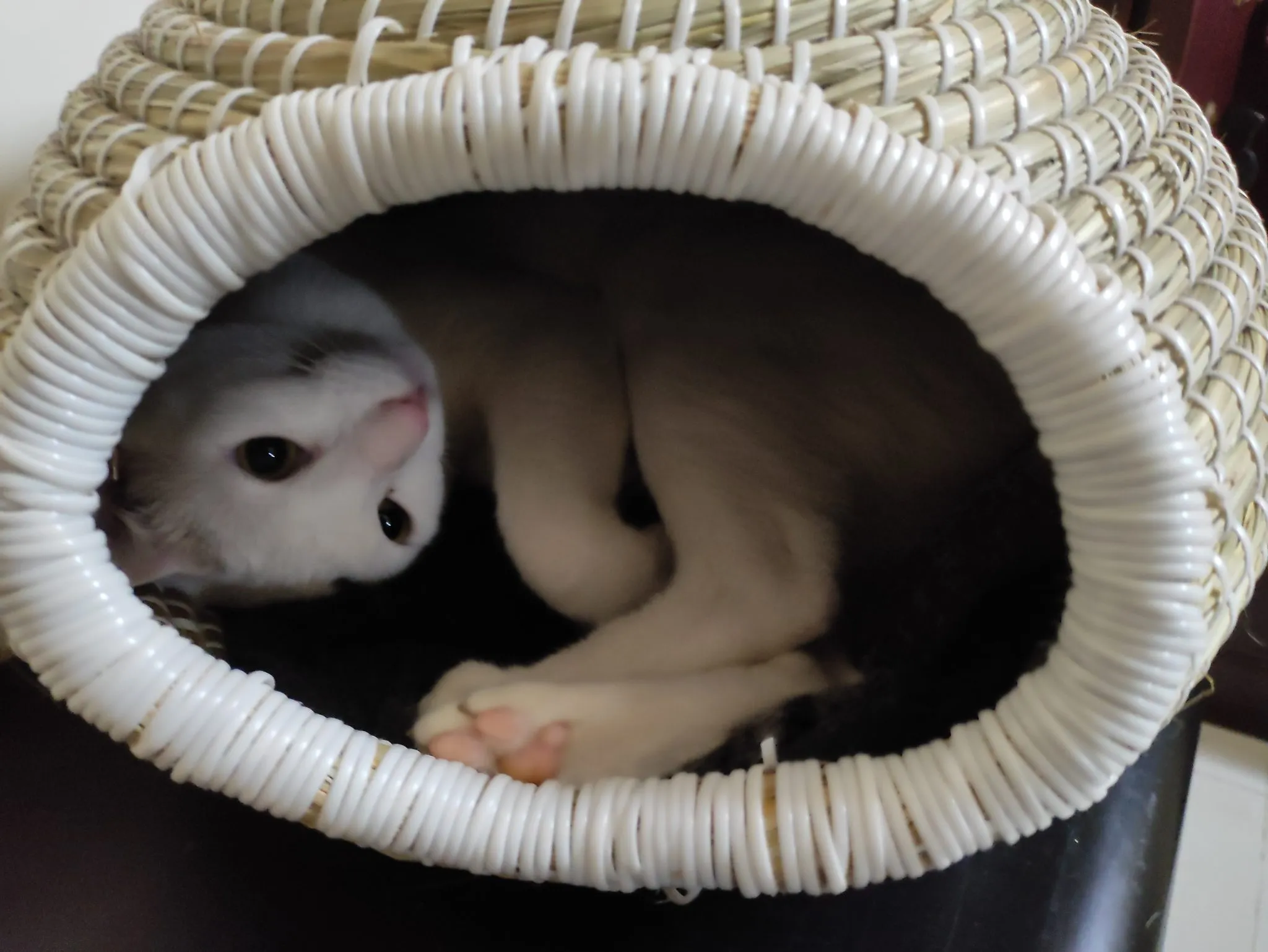
This article is general information, not veterinary advice. If your pet seems unwell or you are worried, call your vet.
In the wild, a cat that looks weak becomes a target, so cats evolved to keep pain to themselves. That instinct is still running in the cat on your sofa. By the time a cat is obviously limping or crying, they may have been uncomfortable for a while.
The trick is to notice small changes from your cat’s normal. You know their habits better than anyone, and that’s exactly what your vet needs.
Step 1: Watch the everyday habits
Most pain shows up first as a change in routine. Check these four areas:
- Eating and drinking. Eating more slowly, dropping food, chewing on one side, preferring soft food over crunchy, or drinking noticeably more or less.
- Activity. Less play, more hiding, sleeping in new or unusual places, or skipping favorite high perches.
- Litter box. Straining, crying, going outside the box, missing the edge, or changes in the size or number of clumps.
- Grooming. Over-grooming one spot (sometimes leaving bald patches on the belly or legs), or under-grooming that leaves the coat greasy, matted or scruffy, especially along the back.
Any sudden change in one of these is worth a closer look.
Step 2: Read posture and movement
- Hunched or tucked. Sitting in a tight “loaf” with feet tucked, back arched and head low, often facing a wall.
- Stiffness. A careful, stiff walk, a lowered tail, or hesitating before jumping up or down.
- Restlessness. Repeatedly getting up and lying down, unable to settle.
- Guarding. Tensing, flinching, growling or walking away when you touch a particular area, such as the back, hips or belly.
Step 3: Look at the face
Researchers developed the Feline Grimace Scale to help vets assess pain from a cat’s expression. You can use the same five features at home as a guide:
| Feature | Relaxed | Possible pain |
|---|---|---|
| Ears | Upright, facing forward | Pulled apart and rotated outward |
| Eyes | Open | Squinting or narrowed |
| Muzzle | Relaxed and round | Tense, flattened or more elliptical |
| Whiskers | Loose and curved | Straight and pulled forward or stiff |
| Head | Held above the shoulders | Level with or lowered below the shoulders, chin tucked |
The more of these you see together, and the longer they last, the more likely your cat is uncomfortable. A cat who is simply sleepy may squint, so look at your cat while they’re awake and not being handled. Snap a few photos to show your vet.
Step 4: Listen
Some cats become unusually vocal, growling, hissing or yowling, especially at night or when they jump, use the litter box or are picked up. Others go quiet. A normally chatty cat who stops talking is also a change worth noting.
Step 5: Keep a short pain diary
For two or three days, jot down morning and evening notes: appetite, litter box output, jumping, grooming, mood and anything that seems to trigger discomfort. Videos of your cat walking, jumping and getting up are especially useful because many cats behave normally at the clinic.
Common causes of pain in cats
Dental disease
Very common, and easy to miss because cats keep eating. Clues include bad breath, drooling, dropping food, chewing on one side and pawing at the mouth.
Arthritis
Extremely common in older cats and widely underdiagnosed. Clues include not jumping onto furniture, using steps instead of leaping, matted fur along the lower back, missing the litter box edge and stiffness after rest.
Urinary problems
Straining, frequent trips, small clumps and crying in the litter box. In male cats, straining with little or no urine can mean a blockage, which is an emergency.
Injuries
Limping after a jump or fall, flinching when touched, swelling, or hiding more than usual.
After surgery
Restlessness, licking at the incision, poor appetite or reluctance to move. Follow the discharge instructions and call the clinic if pain seems uncontrolled.
Make your cat comfortable while you arrange a vet visit
- Bring things down to their level. Add a step or stool to favorite perches and the bed, and offer a low-sided litter box.
- Offer soft food, slightly warmed, if chewing seems to bother them.
- Create a quiet retreat that’s warm, draft-free and away from other pets and household traffic.
- Handle gently and don’t force an examination. Resistance is information in itself.
- Never give human medication. Paracetamol (acetaminophen) is extremely toxic to cats, and ibuprofen and aspirin can be dangerous too. Only use pain relief your vet prescribes.
Cats in pain are very treatable. Vets have cat-safe pain medications and can combine them with dental treatment, weight management, joint-friendly diets and home changes.
When to call the vet
Book an appointment for any ongoing change in eating, activity, grooming or litter box habits, or if your cat seems uncomfortable when touched.
Seek emergency care right away if your cat:
- Has trouble breathing, breathes with an open mouth, or has pale or bluish gums
- Suddenly can’t use their back legs or cries out in pain, which can be a sign of a blood clot
- Strains in the litter box and produces little or no urine
- Vomits repeatedly, collapses, or has had a fall or other trauma
- Stops eating and drinking
Questions people ask
No. Cats often purr when they're content, but some also purr when they're stressed, unwell or in pain. Look at the whole picture: posture, face, appetite and activity.
Never. Paracetamol (acetaminophen) can be fatal to cats even in small amounts, and ibuprofen and aspirin can cause serious kidney and stomach damage. Only give pain relief your vet has prescribed for your cat.
It's common, but it isn't just old age. Reluctance to jump is one of the most typical signs of arthritis in cats, which is very common in seniors and can be treated.
It's a scoring tool developed by veterinary researchers that rates five features of a cat's face (ears, eyes, muzzle, whiskers and head position) to assess pain. Owners can use it as a guide to share observations with their vet.
Keep reading

Holiday Safety for Dogs and Cats: Food, Plants, Decorations and Guests
The holidays bring rich food, glittering decorations and a full house. Here's how to keep your dog and cat safe and calm through the season, and what to do if something goes wrong.
5 min read
Urinary Problems in Cats: Common Causes, Warning Signs and Prevention
Straining, frequent trips and accidents outside the box can mean several different things, and one of them is an emergency. Here's how to tell them apart and keep your cat's bladder healthy.
4 min read

Itchy Dog? 8 Common Skin Allergies and Look-Alike Problems
Fleas, pollen, food and the infections that follow all cause scratching. Here's how to spot the likely culprit, what helps at home, and when your vet needs to step in.
5 min read