
'%20d='m0%200%2016%2011h61%2061%2061%2061%2060L47%2037h61%2061%2060%2061L16%2063h61%2061%2061%2061%2060L47%2089h61%2061%2060%2061L16%20115h61%2061%2061%2061%2060L47%20141h61%2061%2060%2061L16%20166h61%2061%2061%2061%2060L47%20192h61%2061%2060%2061L16%20218h61%2061%2061%2061%2060z'/%3e%3c/svg%3e)



Indoor Cat Enrichment: A Daily Routine Your Cat Will Actually Use
Play that mimics hunting, food your cat has to forage for, and space to climb. Here's how to build a simple daily routine that keeps an indoor cat busy and content.
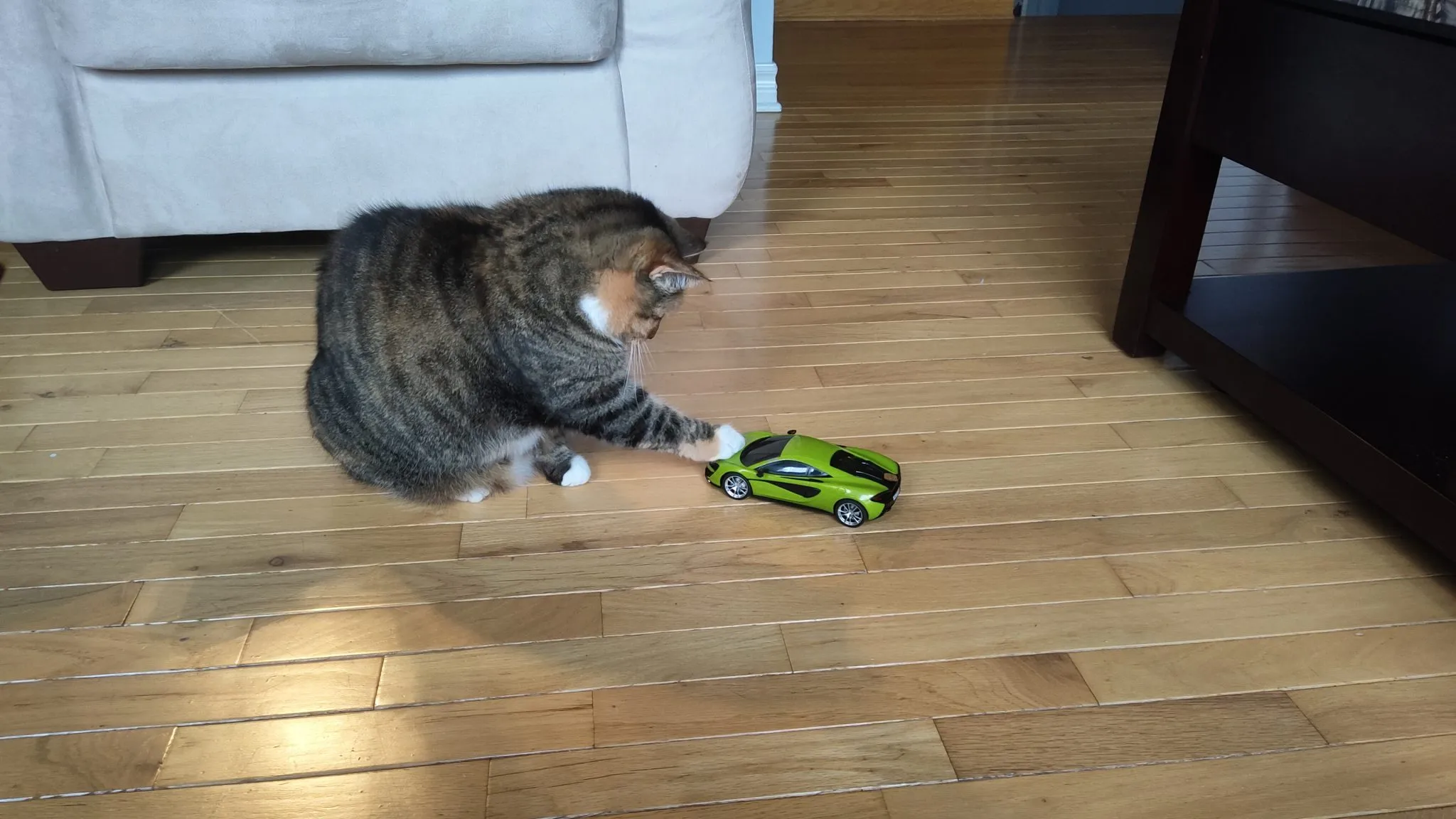
This article is general information, not veterinary advice. If your pet seems unwell or you are worried, call your vet.
Keeping cats indoors protects them from traffic, fights and disease. But an indoor cat’s world is small, and without some help it can get predictable fast.
A bored cat might sleep all day and race around at night, ambush your ankles, overeat, or knock things off shelves to get your attention. The fix doesn’t require a bigger home. It’s about giving your cat daily chances to do what cats are built to do: hunt, forage, climb, scratch and watch.
Think like a hunter
Cats are predators that, in nature, eat many small meals a day. Each meal involves a hunt sequence: stalk, chase, pounce, catch, eat, groom, sleep. Indoor cats rarely get to run that whole cycle, and that’s often where restlessness comes from.
The best enrichment recreates pieces of it every day.
Play: make it a real hunt
Interactive play with a wand toy is the most important thing you can do for an indoor cat.
How to play like prey:
- Move the toy away from your cat or across their line of sight. Prey doesn’t run toward predators.
- Mix it up: let the toy hide behind furniture, freeze, then dart off.
- Let your cat catch it several times during the session, not just at the end.
- Finish with a final catch, then wind down slowly instead of stopping abruptly.
- Follow play with a small meal or treat, so the cycle ends with “eat.”
When: two or three sessions a day, about 10 to 15 minutes each. Dawn and dusk are prime time, since cats are naturally most active then. A session just before your bedtime can also help with 4 a.m. wake-up calls.
Put wand toys away after play so the strings can’t be chewed or swallowed.
Foraging: let them work for food
In a bowl, a meal lasts a minute. With a little effort, it can become an activity.
- Puzzle feeders: balls and boards that release kibble when batted. Start with the easiest setting.
- Hide-and-seek meals: put small portions of dry food in a few spots around the house.
- Treat toss: throw single kibbles down a hallway for your cat to chase.
- Egg-carton or toilet-roll puzzles: simple homemade options with a few kibbles inside.
- Lick mats: spread a thin layer of wet food across a textured mat. Your cat has to lick it out slowly, which turns a fast meal into a calm, longer activity. Freezing the mat first makes it last longer.
Use part of your cat’s normal daily food for all of this, so enrichment doesn’t lead to weight gain. Wash lick mats and puzzle feeders after wet food.
Vertical space: give them height
Cats feel safer when they can survey their territory from above. Height also adds a lot of “space” to a small home.
- Cat trees near a window are often the most-used piece of cat furniture in the house.
- Wall shelves can create a climbing route around a room.
- Window perches give a front-row seat to birds and passing people.
- Clear tops of bookcases or wardrobes with a safe way up.
In multi-cat homes, vertical space helps cats share a room without conflict. Make sure there’s more than one route up and down, so no cat gets trapped.
Scratching: a need, not a habit
Scratching keeps claws healthy, stretches the body and leaves scent marks. Cats need to do it.
- Choose posts tall and sturdy enough for a full stretch without wobbling.
- Offer both vertical posts and horizontal scratchers. Cats have preferences.
- Place them near sleeping spots and where your cat already scratches, like the sofa arm.
- Reward use with praise or a treat.
Feed the senses
- Window watching: a bird feeder outside a window can be hours of entertainment.
- Cat grass: safe greenery to nibble, grown from a pot.
- Catnip or silvervine: many cats respond, though not all. Use it occasionally to keep it special.
- New smells: a cardboard box or a paper bag (handles removed) can be fascinating.
- Rotate toys: keep most toys away and swap a few in every few days. Old toys become “new” again.
Safe outdoor time
If you want to give your cat fresh air, consider a catio (an enclosed outdoor space) or harness training. Introduce the harness slowly, indoors first, with lots of treats. Never leave a cat tied up outside unattended.
A sample daily routine
| Time | Activity |
|---|---|
| Morning | 10-minute wand play, then breakfast in a puzzle feeder |
| Daytime | Window perch, cat tree, a few hidden kibble “finds” |
| Afternoon | New box or rotated toy |
| Evening | 10 to 15 minutes of play, then a lick mat with part of dinner |
| Bedtime | Short play session, then a small snack |
You don’t need to do everything every day. Consistency matters more than variety. Even two short play sessions and one foraging activity will make a difference for most cats.
Multi-cat households
More cats means more resources. Provide several feeding spots, water bowls, scratching posts, resting places and litter boxes in different areas. A common guide is one litter box per cat plus one extra. Play with cats separately if one tends to steal the toy.
When to call the vet
Boredom causes plenty of annoying behavior, but some changes are signs of illness, not under-stimulation. Contact your vet if you notice:
- Sudden changes in appetite, thirst or weight
- Peeing or pooping outside the litter box, or straining in the box
- Overgrooming or bald patches
- Hiding much more than usual, or aggression that’s new
- Restlessness or vocalizing at night in an older cat
A male cat straining to pee with little or nothing coming out is an emergency. Get to a vet right away.
The bottom line
Indoor cats thrive on small, daily doses of hunting, foraging and climbing. A wand toy, a puzzle feeder, a lick mat, a sturdy scratching post and a window with a view cover most of what your cat needs. Build them into the same times each day, and you’ll likely see a calmer, happier cat, and fewer 4 a.m. wake-up calls.
Questions people ask
Most cats do well with two or three short play sessions a day, about 10 to 15 minutes each. Young and high-energy cats may want more. Short, frequent sessions work better than one long one.
They're fine in moderation, but cats can never catch the dot, which can be frustrating. End each laser session by switching to a toy they can grab, or by tossing a treat.
Not if you use part of their normal daily food. Measure the day's portion, then split it between the bowl, puzzle feeders and lick mat.
Try a different kind of 'prey' (feathers, crinkly toys, things that move along the floor), play at dawn or dusk when cats are naturally most active, and move the toy away from your cat, not toward them.
Keep reading

Why Is My Dog Chewing Everything? A Guide by Age, Plus Safe and Risky Chews
Chewing is normal at every age, but the reasons change. Here's what's behind it for puppies, teenagers and adult dogs, what actually helps, and which chews can crack a tooth.
5 min read

How to Keep Your Dog Busy When You Leave (or Work From Home)
Practical enrichment ideas for the hours your dog spends on their own or watching you work, plus how to tell everyday boredom from real separation anxiety.
5 min read
Designing a Cat-Friendly Home: Vertical Space and Hiding Spots
Cats feel safest when they can climb, perch and tuck away. How to plan perches, routes and hideouts that work in apartments, houses and multi-cat homes.
4 min read