

'%20d='m0%200%2016%2011h61%2061%2061%2061%2060L47%2037h61%2061%2060%2061L16%2063h61%2061%2061%2061%2060L47%2089h61%2061%2060%2061L16%20115h61%2061%2061%2061%2060L47%20141h61%2061%2060%2061L16%20166h61%2061%2061%2061%2060L47%20192h61%2061%2060%2061L16%20218h61%2061%2061%2061%2060z'/%3e%3c/svg%3e)



5 Ways to Reduce Dog Anxiety at Home
Pacing, panting, whining at the door? These five simple habits help an anxious dog feel safe, and one of them takes about two minutes to prep.
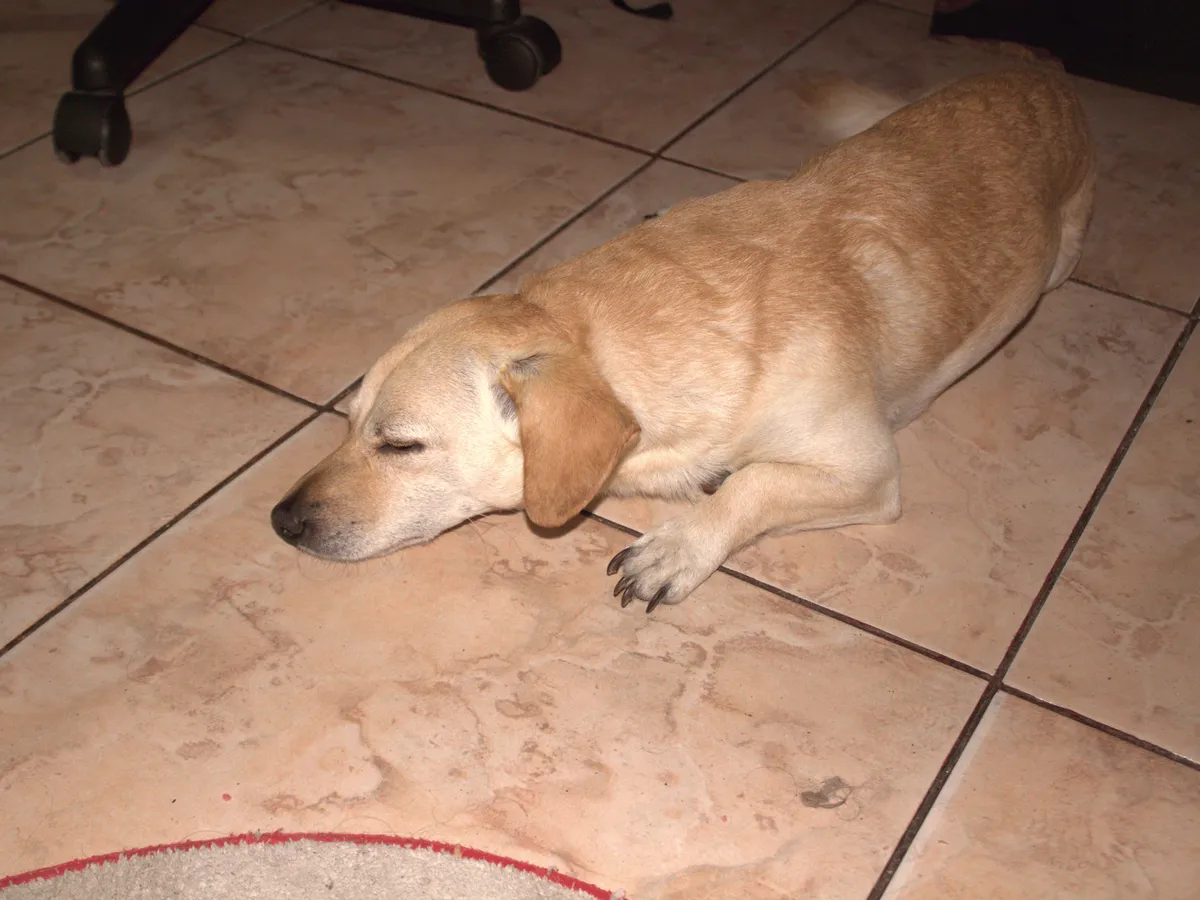
Some dogs worry. They pace when you pick up your keys. They pant through storms. They follow you from room to room and never seem to switch off.
The good news is that small daily habits can make a real difference. Here are five that trainers and vets often suggest, starting with the easiest.
Signs your dog is anxious
Anxiety doesn't always look like shaking. Watch for:
- Pacing, panting or drooling when it isn't hot
- Lip licking, yawning, or showing the whites of their eyes
- Whining, barking or scratching at the door when you leave
- Chewing or digging that happens mostly when they're stressed
- Hiding, trembling or a tucked tail during storms, fireworks or visits
If the signs are new, sudden or severe, start with your vet. Pain and illness can look a lot like anxiety.
1. Keep a steady routine
Dogs feel safer when they can guess what comes next. Try to keep meals, walks and bedtime at about the same time each day.
Keep your comings and goings low-key, too. A big goodbye and an excited hello can make leaving feel like a big event. A calm “see you later” works better.
2. Give them something to lick
For many dogs, licking is calming. It's slow and steady, and it gives a busy mind one simple job to do.
That's why many trainers suggest a frozen, food-filled toy for the hard parts of the day: while you cook, while you're on a call, or when the doorbell keeps ringing. Freezing it makes it last longer. Owners often see 20 to 45 minutes of quiet licking.
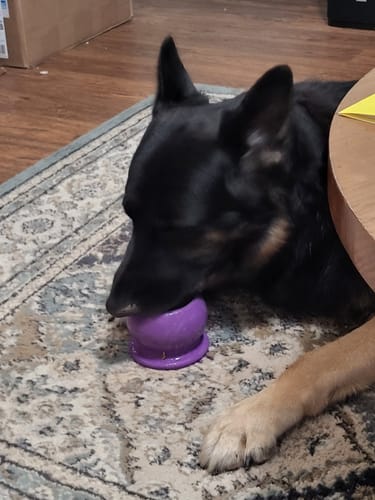
Make it part of the routine from step 1. When the toy shows up at the same tense moments every day, your dog starts to link those moments with something good.
3. Practise short goodbyes
If your dog gets upset when you leave, practise leaving in tiny steps. Pick up your keys and sit back down. Step outside for 10 seconds, then come back in calmly. Slowly build up the time.
It also helps to pair your getting-ready time with something good. Hand over a frozen toy while you put on your shoes and grab your bag, so those cues start to mean “treat time” instead of “panic time.”
For real separation anxiety, where a dog hurts themselves or can't be left at all, talk to your vet or a certified behaviourist. A toy can help a dog settle, but it isn't a treatment on its own.
4. Make a safe, quiet spot
Give your dog a den: a crate with the door open, a covered bed, or a quiet corner away from the front door. Add a blanket that smells like home. Some dogs settle better with soft music or a fan for background noise.
Make that spot a happy place. Serve meals or a frozen toy there, and never use it for punishment. This matters most in storm season and around fireworks.
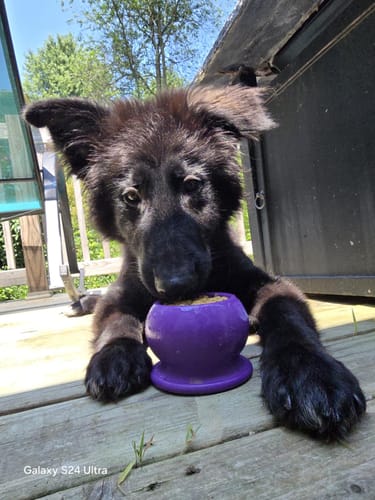
5. Let them sniff every day
A tired dog is often a calmer dog, but it's not only about running. Sniffing is hard work for a dog's brain. A slow “sniff walk,” where your dog picks the route and stops to smell, can settle them more than a fast jog.
Aim for one sniff walk a day, plus short games at home, like hiding a few treats around the living room.
A simple calm-day plan
| When | What to do | Why it helps |
|---|---|---|
| Morning | Sniff walk, then breakfast in a frozen toy | Brain work, then a slow, calm meal |
| Busy times | Frozen toy in their safe spot | A quiet job while you need yours |
| Before you head out | Calm goodbye routine with a treat | Makes your leaving cues feel safe |
| Evening | Short play, then a lick break before bed | Helps them wind down for the night |
| Storms or fireworks | Safe spot, soft noise, a frozen toy | Gives them something else to focus on |
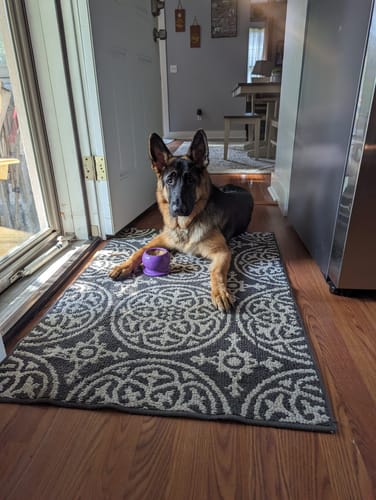
The toy owners keep coming back to
One frozen toy that comes up again and again is the Freezball by Freezbone. It's a round, natural rubber cup you fill with food and freeze.
- A flat base, so it sits still on the floor and stands up in the freezer.
- A wide opening, so your dog can reach the food without getting frustrated.
- Four sizes: S (up to 5 kg), M (up to 10 kg), L (up to 25 kg) and XL (up to 40 kg).
- Easy to clean: 100% natural rubber and dishwasher-safe.
Here's the catch with any frozen toy: it spends most of its life in the freezer. That's why owners end up buying more than one. With three, one is frozen and ready, one is in use, and one is in the wash.
Right now Freezbone has a Buy 2, Get 1 Free deal on Freezballs. Pick any three, in any size or colour, and the third one is free. No code needed. It's rated 4.9 out of 5 from 1,083 reviews and comes with Freezbone's 30-day promise. Build your pack and see today's price.
What owners say
Trainers and foster carers mention the same thing: licking helps a dog let go of stress.
“I bought 3. These are great I use them for dinner. I am also a dog trainer who works with rescue dogs and I recommend this. Licking relive stress in dogs and and provides mental enrichment.” (Lee W.)
“My fosters usually get a Freezebone with a meal in their crate as soon as I bring them into my home. They're great to let them enjoy something to eat and decompress after a stressful few days of transport and isolation.” (Jennifer S.)
The bottom line
Anxious dogs do best with calm, steady days: a routine they can count on, a safe spot, daily sniffing, and simple jobs for their brain. A frozen lick toy is one of the easiest pieces to add, because you prep it once and it's ready when the stressful moment hits.
If you want to try it, Freezbone's Buy 2, Get 1 Free pack gives you a full rotation of three. Pick your sizes and check the price for your country.
What customers say
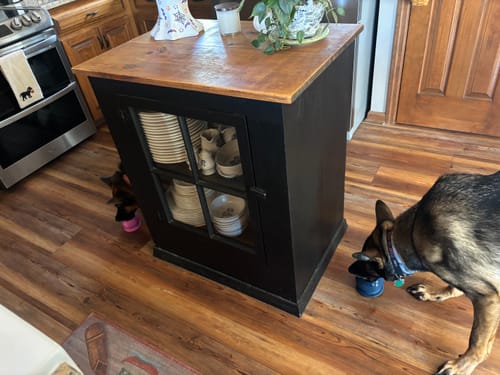 ★★★★★★★★★★
“Our two Germans love these! It’s both a fun way for a treat with nutrition and helps my one pup with her anxiety. Our dogs say “Yummy & Fun”. Thank you”
Stephanie R. · Freezball · Verified buyer
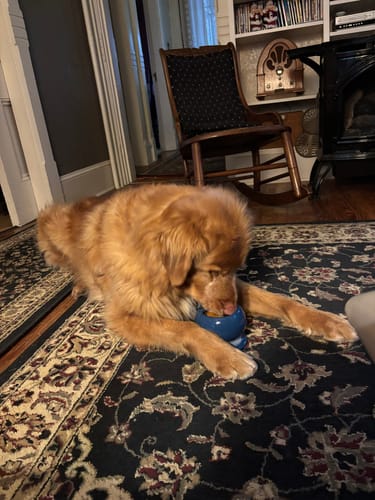 ★★★★★★★★★★
“Our dog, Collins, loves these treats. He settles down and spends about 20 minutes enjoying the FreezeBone.”
Kathy B. · Freezball · Verified buyer
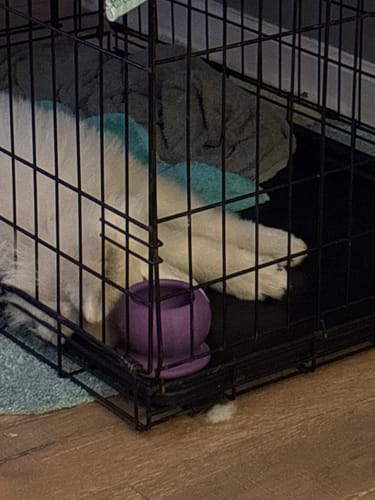 ★★★★★★★★★★
“My new large breed puppy has two freeze bones and I credit them for allowing her to be crate trained and settled much easier. We love these and I’d recommend to anyone with puppies especially!”
Shari W. · Freezball · Verified buyer
- ★★★★★★★★★★
“Our new rescue puppy loves his freezbone! We give it to him when he's getting restless and it's time to relax. He's passed out as soon as he finishes it!”
Hala R. · Freezball · Verified buyer
- ★★★★★★★★★★
“My baby is a big chewer and licking helps her anxiety or high energy. This is fantastic. It does not last 40 mins with her. I am lucky to get 20mins but she loves it and it is great. Giving her a lot of healthier treats. Especially in this hot weather. Would definitely buy again”
Gerry R. · Freezball · Verified buyer
- ★★★★★★★★★★
“My dog loves his freezebone. He gets it when he needs to be crated and it makes that experience less stressful for him.”
Lisa F. · Freezball · Verified buyer
Reviews from verified Freezbone customers, shown as written.
Questions people ask
Licking is a slow, repeated behaviour that helps many dogs settle, which is why trainers often suggest lick mats and frozen toys. Every dog is different, and a toy is not a treatment for severe anxiety.
Pick any three Freezballs on Freezbone's pack page, in any size or colour. You pay for two and the third is free. If you mix sizes, the lowest-priced one is the free one. No code is needed.
Pick by your dog's weight: S (up to 5 kg), M (up to 10 kg), L (up to 25 kg) and XL (up to 40 kg).
No toy is indestructible, so Freezbone's guidance is to stay nearby, check the toy before each use, and take it away if it cracks or pieces go missing. For longer absences, a sitter or dog walker can hand it over.
Anything soft or pourable that's safe for dogs: wet food, plain yogurt, pumpkin, mashed banana, bone broth with kibble, or xylitol-free peanut butter. Avoid grapes, onions, chocolate and anything with xylitol.
Keep reading
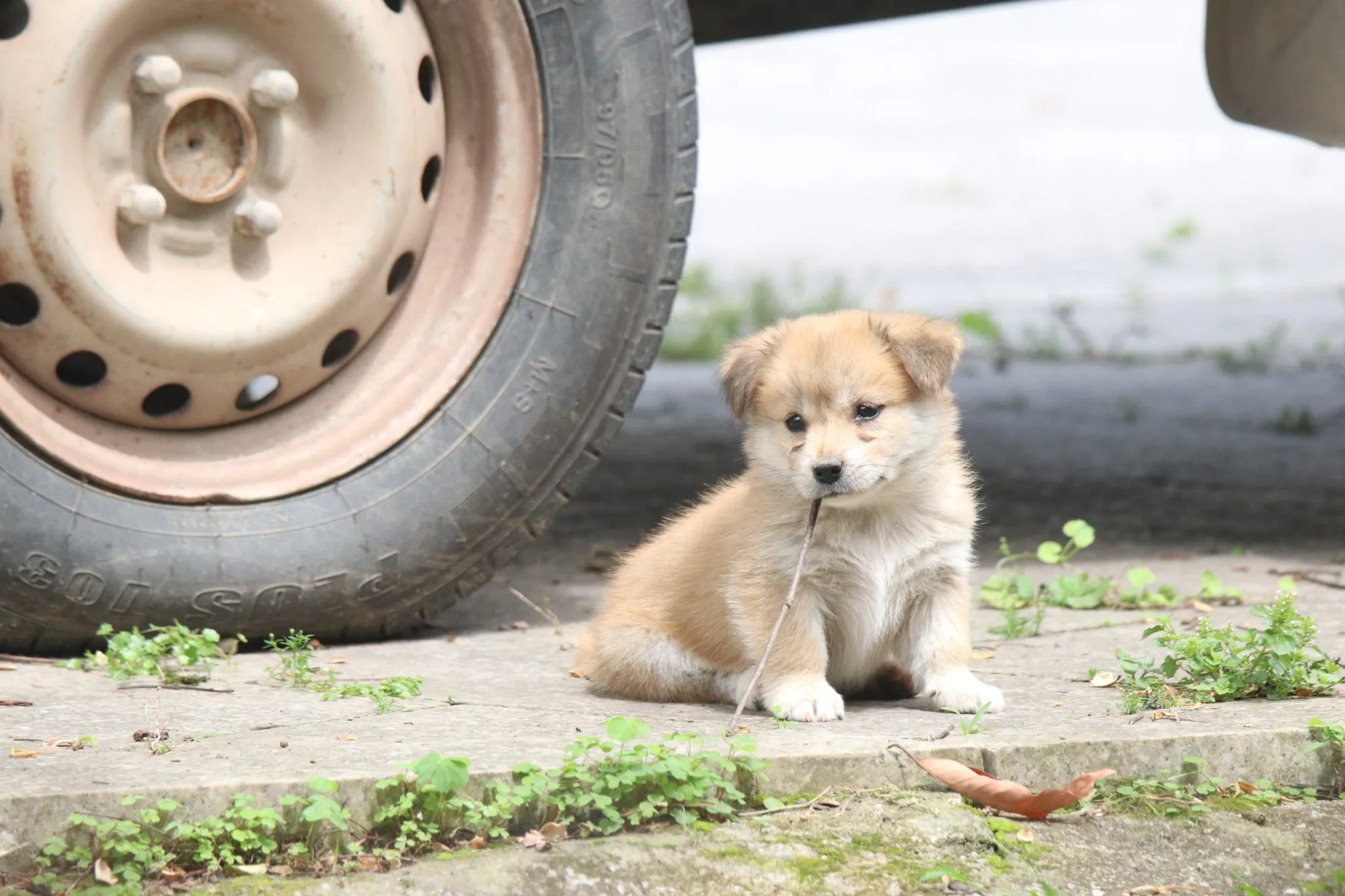
Why Is My Dog Chewing Everything? A Guide by Age, Plus Safe and Risky Chews
Chewing is normal at every age, but the reasons change. Here's what's behind it for puppies, teenagers and adult dogs, what actually helps, and which chews can crack a tooth.
5 min read
How to Keep Your Dog Busy When You Leave (or Work From Home)
Practical enrichment ideas for the hours your dog spends on their own or watching you work, plus how to tell everyday boredom from real separation anxiety.
5 min read
The Lick Break: A Simple Daily Habit for Dogs Who Can't Settle
Restless during your work calls, underfoot at dinner, wild at 8 p.m.? A frozen, filled toy gives your dog a calm, focused job for the moments you need one.
5 min read