
'%20d='m0%200%2016%2011h61%2061%2061%2061%2060L47%2037h61%2061%2060%2061L16%2063h61%2061%2061%2061%2060L47%2089h61%2061%2060%2061L16%20115h61%2061%2061%2061%2060L47%20141h61%2061%2060%2061L16%20166h61%2061%2061%2061%2060L47%20192h61%2061%2060%2061L16%20218h61%2061%2061%2061%2060z'/%3e%3c/svg%3e)



Puppy Potty Training: 5 Common Mistakes and How to Fix Them
Most house-training trouble comes from the setup, not a stubborn puppy. Here are the five mistakes that slow things down, plus a sample daily schedule that works.
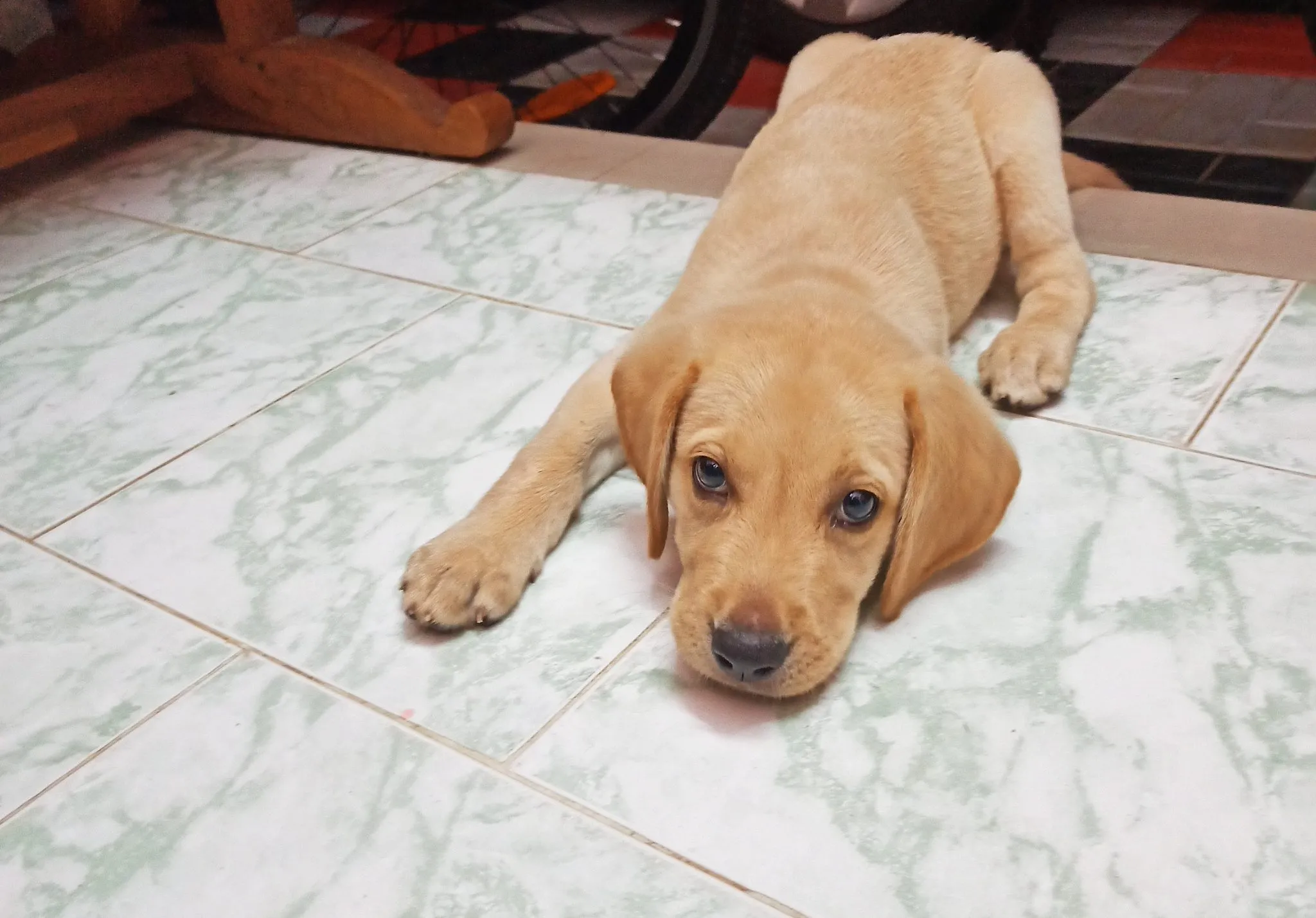
House training is a pattern game. A puppy learns where to go by repeating the same sequence again and again: wake up, go outside, pee, get rewarded. When accidents keep happening, the cause is almost always a gap in that system, not a defiant dog.
Fix the five mistakes below and most puppies make steady progress within a few weeks.
Mistake 1: Too much freedom, too soon
A puppy with the run of the house will find quiet corners behind the couch and under the dining table. Every unnoticed accident is a rehearsal, and rehearsals build habits.
The fix:
- Keep your puppy in a small, puppy-proofed area (an exercise pen or a gated kitchen) whenever you can’t watch closely.
- Use a crate for naps. Size it so your pup can stand, turn around and lie down comfortably, but not wander to one end to pee.
- Indoors, try the tether method: clip a light leash to your puppy and to your belt. You’ll spot the sniff-circle-squat sequence before it ends in a puddle.
- Expand access one room at a time after about a week with no accidents in the current space.
Mistake 2: An inconsistent schedule
Random meal times mean random bathroom times, which turns supervision into guesswork.
The fix:
- Feed at the same times every day and pick up the bowl after about 20 minutes.
- Take your puppy out at predictable trigger points: right after waking, within 5 to 15 minutes of eating, after play, after any excitement (like visitors arriving), and every 1 to 2 hours while awake.
- Keep water available during the day, but avoid big drinks in the last couple of hours before bed. Do a final potty trip right before lights out.
Mistake 3: Waiting too long outside, or coming back in too fast
Some puppies get so distracted outdoors that they forget why they’re there, then pee on the rug a minute after coming back in.
The fix:
- Always go to the same spot. The familiar smell helps, so stand still and stay boring.
- Give it 3 to 5 minutes. If nothing happens, go back inside, put your pup in the crate or pen for 10 minutes, then try again. Repeat until it works.
- When your puppy goes, praise calmly and give a treat within a second or two, right there in the toilet spot, not back at the door. Then offer a few minutes of play or sniffing as a bonus reward.
Mistake 4: Punishing accidents and using the wrong cleaner
Scolding, or the old advice of rubbing a pup’s nose in it, doesn’t teach where to go. It teaches your puppy to hide from you when they need to pee, which makes training harder.
Cleaning matters too. Many household cleaners contain ammonia, which smells similar to urine and can invite repeat visits.
The fix:
- If you catch your puppy mid-squat, interrupt gently (“Outside!”), scoop or lead them to the toilet spot, and reward if they finish there.
- If you find an accident after the fact, just clean it up. It’s too late to teach anything.
- Use an enzymatic cleaner made for pet messes. A UV flashlight can help you find spots you missed.
- Jot down the time and place of each accident. Patterns tell you where to tighten supervision.
Mistake 5: Expecting nighttime perfection too early
Young puppies have small bladders and sleep deeply, so many need one or two trips outside overnight for the first weeks.
The fix:
- Build a short bedtime routine: calm time, a last potty trip, then straight to the crate.
- Keep the crate close enough that you’ll hear your puppy stir.
- Make night trips dull on purpose: leash on, out to the toilet spot, no play or chatting, then back to bed.
- As your puppy matures, the overnight stretch lengthens. Adjust gradually rather than skipping trips all at once.
Learn the warning signs
Catching the signal early is half the job. Watch for:
- Sudden sniffing and circling, or heading straight to a favorite corner or rug
- Restlessness after a nap, a play burst or a drink
- Leaving a toy or game to sniff along a doorway or wall
- Whining, staring at you, or wandering toward the exit
A sample day
Adjust the times to your puppy’s age and your household.
| Time | What happens |
|---|---|
| Wake-up | Straight outside, reward, then breakfast |
| 10–15 min after breakfast | Outside again |
| Morning | Supervised play and short training in the pen or on the tether |
| Nap (60–90 min) | In the crate; outside immediately on waking |
| Lunch | Outside 5–15 minutes after eating |
| Afternoon | Outside every 1–2 hours, plus after every play session |
| Dinner | Outside 5–15 minutes after eating |
| Evening | Calm time, final potty trip, bed |
Helpful gear
- A properly sized crate (or a divider for a bigger one)
- An exercise pen or baby gates
- A lightweight house leash for tethering
- Enzymatic cleaner and paper towels
- Small, soft training treats kept by the door
- Optional: a bell on the door handle, introduced once the routine is solid
When you’re stuck
- Accidents cluster at the same time of day: schedule a potty trip 10 minutes before that window.
- Your pup prefers carpet: clean the area thoroughly, then make it a feeding or play spot for a while. Most dogs avoid soiling where they eat.
- Bad weather stalls progress: create a covered toilet area near the door so trips stay short and consistent.
- Accidents increase along with thirst, straining or large volumes of urine: stop troubleshooting and call your vet. A urinary tract infection or other medical issue may be the real cause.
Consistency beats intensity. A boring, predictable routine, lots of supervision, and well-timed rewards will get almost any puppy there.
Questions people ask
A common rule of thumb is the puppy's age in months plus one, in hours, during the day. A 3-month-old might manage about 4 hours at most, but every pup is different, so plan breaks well before the limit.
Many puppies are reliable within a few weeks to a few months with a consistent routine. Small breeds and puppies with a history of indoor accidents often take longer. Expect occasional slip-ups until about 6 months of age.
Pads can help in high-rise apartments or for very young puppies, but they teach a dog that going indoors is fine. If your goal is outdoor-only, use them briefly and consistently, then move the pad toward the door and outside.
If your puppy suddenly has more accidents, strains, drinks or pees much more than usual, or has blood in the urine, see your vet. Urinary tract infections and stomach upsets are common in puppies and can derail training.
Keep reading
Recall Training: How to Teach Your Dog a Reliable 'Come'
A step-by-step plan to build a recall that holds up around squirrels, other dogs and dropped sandwiches, from indoor basics to long-line proofing.
5 min read
How to Train Your Cat to Walk on a Leash and Harness
Harness walks give indoor cats fresh smells and sunshine without the risks of roaming. Here's how to get there calmly, one small step at a time.
5 min read
Clicker Training for Cats: How to Get Started
Yes, cats can be trained, and most enjoy it. Here's how to charge a clicker, teach your first behaviors and use them for real-life wins like calmer carrier trips.
5 min read