

'%20d='m0%200%2016%2011h61%2061%2061%2061%2060L47%2037h61%2061%2060%2061L16%2063h61%2061%2061%2061%2060L47%2089h61%2061%2060%2061L16%20115h61%2061%2061%2061%2060L47%20141h61%2061%2060%2061L16%20166h61%2061%2061%2061%2060L47%20192h61%2061%2060%2061L16%20218h61%2061%2061%2061%2060z'/%3e%3c/svg%3e)



Clicker Training for Cats: How to Get Started
Yes, cats can be trained, and most enjoy it. Here's how to charge a clicker, teach your first behaviours and use them for real-life wins like calmer carrier trips.
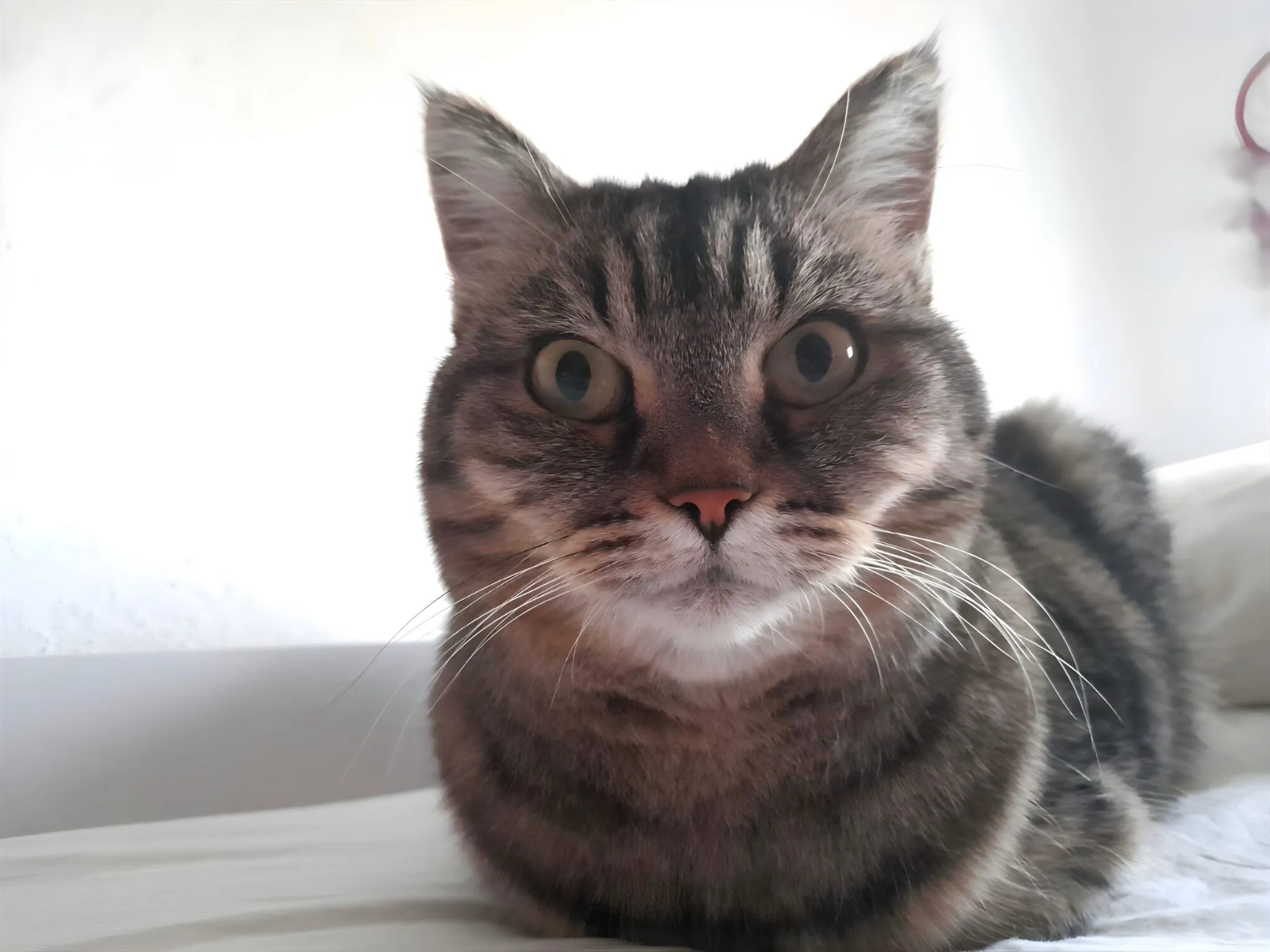
Cats have a reputation for being untrainable. In reality, they learn quickly when the lessons are short, the rewards are good and they get to choose whether to take part. Clicker training checks all three boxes, and it’s genuinely useful: it can make carrier trips, grooming and vet visits easier for everyone.
How clicker training works
A clicker makes a short, consistent sound. You click at the exact moment your cat does something you like, then follow with a treat. Over time the click becomes a promise: “That thing you just did earned a reward.”
Why it works so well:
- Precision. A click marks a split-second action far more clearly than “good kitty” said a moment too late.
- Clarity. Click always means a treat is coming, so your cat knows exactly where they stand.
- Choice. Your cat offers behaviours rather than being pushed into them, which builds confidence in shy or nervous cats.
What you need
- A box clicker, or a quieter alternative if your cat is sound-sensitive (a clicking pen, a tongue click, or a crisp word like “yes”)
- Soft treats your cat loves, cut into tiny pieces, or a lickable treat on a spoon
- A target stick: a chopstick or the capped end of a pen works
- A small mat or towel to use as a training station
- A quiet room with few distractions
Step 1: Charge the clicker
Before your cat can learn anything with the clicker, the sound needs meaning.
- Click, then give a treat within about a second.
- Repeat 10 to 20 times. Don’t ask for any behaviour yet.
- Do this for a session or two until your cat perks up or looks for the treat when they hear the click.
That’s it. You’ve built your marker.
Step 2: Teach your first behaviours
Start with easy wins that teach your cat the rules of the game.
Name game
Say your cat’s name once. The moment they glance at you, click and treat.
Hand target
Hold two fingers an inch or two from your cat’s nose. Most cats will sniff. When their nose touches, click and treat. Gradually move your hand a little higher, lower or farther away.
Go to mat
Place a mat on the floor. Click when a paw touches it, then treat on the mat. Over sessions, wait for two paws, then four, then a sit.
Step 3: Use a target stick
Target-stick training lets you move your cat around without picking them up.
- Hold the tip of the stick an inch or two from your cat’s nose. Click and treat for a nose touch.
- Slowly move the stick farther away, so your cat takes a step or two to reach it.
- Once your cat follows reliably, add a word like “touch” just before you present the stick.
Now you can guide your cat onto a scale, up onto a perch, or into a carrier.
Step 4: Carrier confidence
This is where clicker training pays off for many cat owners.
- Make the carrier part of the furniture. Leave it out with the door open and a soft blanket inside. Drop treats in it now and then.
- Target your cat toward it. Click and treat for approaching, then for front paws inside, then for all four paws.
- Reward calm time inside. Give a jackpot of several treats when your cat settles in the carrier.
- Add the door slowly. Close it for a second or two, open, treat, and let your cat leave. Build up duration over many sessions.
Session recipe
| Element | Guideline |
|---|---|
| Length | 30 to 90 seconds |
| Frequency | Two or three mini-sessions a day |
| Treats per session | About 5 to 10 tiny pieces |
| Structure | 3 to 5 reps of one behaviour, a short break, then switch or stop |
| Ending | Always on a success |
If your cat walks away, the session is over. That’s feedback, not failure: next time, make it shorter or easier.
Common mistakes and fixes
- Clicking late. Click the instant the behaviour happens, even as it begins.
- Talking over the click. Let the click do the work. Add praise after the treat if you like.
- Using the click to call your cat. The click only ever means “you earned it,” never “come here.”
- Raising the bar too fast. Change one thing at a time: distance, duration or distraction.
- Big treats. Large rewards fill cats up fast and end sessions early. Go tiny.
Fun next steps
Once the basics are solid, try:
- High five: build from the hand target by holding your hand a little higher until your cat lifts a paw.
- Spin: lure a small circle with your target hand, click as your cat completes it, then fade the lure.
- Go to place: send your cat to a mat or perch from across the room.
- Hoop jump: start with the hoop resting on the floor so your cat simply walks through.
Training in a multi-cat home
- Train cats separately at first, in different rooms, to avoid crowding or guarding.
- Say each cat’s name before a cue so the right cat knows it’s their turn.
- Keep turns short and rotate every 30 to 60 seconds if you train together later.
A two-week starter plan
- Days 1–2: Charge the clicker and play the name game.
- Days 3–4: Hand target and the start of go-to-mat.
- Days 5–6: Introduce the target stick and short carrier games.
- Days 7–10: Link simple behaviours, such as target to mat, then sit.
- Days 11–14: Add mild distractions while keeping sessions short and upbeat.
A few minutes a day is plenty. Many cats start greeting the clicker with real enthusiasm, and that’s half the fun.
Questions people ask
Yes. Cats of any age can learn with short, positive sessions. Older cats may prefer lower-energy behaviours such as nose targeting or settling on a mat, so pick tasks that suit their mobility.
Muffle the clicker in a pocket or under a towel, use a quieter clicking pen, or switch to a tongue click or a short word like 'yes.' Any consistent, brief sound works as a marker.
Use tiny pieces, about the size of a pea or smaller, and count training treats as part of your cat's daily food. Keeping all treats to around 10% of daily calories helps prevent weight gain.
No. The clicker is for teaching new behaviours. Once your cat reliably responds to a cue, you can reward with treats, play or affection without clicking every time.
Keep reading
How to Train Your Cat to Walk on a Leash and Harness
Harness walks give indoor cats fresh smells and sunshine without the risks of roaming. Here's how to get there calmly, one small step at a time.
5 min read
Recall Training: How to Teach Your Dog a Reliable 'Come'
A step-by-step plan to build a recall that holds up around squirrels, other dogs and dropped sandwiches, from indoor basics to long-line proofing.
5 min read

Puppy Potty Training: 5 Common Mistakes and How to Fix Them
Most house-training trouble comes from the setup, not a stubborn puppy. Here are the five mistakes that slow things down, plus a sample daily schedule that works.
5 min read