
Vet-noted reminder: Cats are experts at hiding pain. This guide is educational, not a diagnosis. If you’re worried, contact your veterinarian.
Cats evolved to mask weakness—so by the time you notice a problem, your cat may have been uncomfortable for days or weeks. Here’s a practical, step-by-step way to spot pain early and help your cat feel better.
Step 1: Scan the Big Four Behaviors (Daily Check)
– Appetite & Water: Eating slower, avoiding crunchy food, drinking more/less, dropping food, preferring soft food.
– Energy: Less play, hiding more, skipping favorite window perches, sleeping in unusual places.
– Litter Box: Straining, crying, small/large clumps outside normal, constipation/diarrhea, accidents.
– Grooming: Overgrooming one spot (tummy, legs) or under-grooming (greasy, unkempt coat).
Quick rule: Any sudden change in one of these areas warrants a closer look.
Step 2: Read Cat Body Language
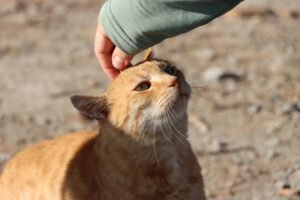
– Posture: Hunched or loafed with tucked feet, head down, squinting eyes, ears turned sideways/back.
– Movement: Stiff walking, reluctance to jump, hesitation before stairs, bunny-hopping, tail low.
– Touch Responses: Flinching, growling, or leaving when you stroke the back, hips, or belly.
– Face: Narrowed eyes, flattened ears, whiskers pulled forward or tight against muzzle (see “Feline Grimace Scale” below).
Step 3: Listen for Pain Vocalizations
– New sounds: Grumbling, hissing, low meows, yowling (especially at night), or silence in a usually chatty cat.
– During specific actions: Meow when jumping, using the litter box, or being lifted.
Step 4: Do a Gentle At‑Home Check (2 Minutes)
– Hands-off first: Watch your cat walk, sit, jump.
– Hands-on: With calm petting, feel along the spine, hips, and limbs. Stop if your cat withdraws, tenses, or vocalizes.
– Mouth glance: If safe, lift lip to check for red gums, broken teeth, or tartar—dental pain is common.
> If your cat resists handling more than usual, that resistance itself is data—don’t force it.
Step 5: Use the Feline Grimace Scale (FGS) Snapshot
The Feline Grimace Scale scores five facial “action units”: ears, eyes, muzzle, whiskers, head position.
– Ears: forward/neutral (0), slightly sideways (1), flattened (2)
– Eyes: open (0), partially closed (1), narrowed/squinted (2)
– Muzzle: relaxed (0), tense (1), strained (2)
– Whiskers: neutral (0), slightly forward/back (1), markedly moved (2)
– Head: above shoulders (0), level (1), below shoulders (2)
A higher total suggests pain—use it as a guide and share with your vet.
Step 6: Track for 48 Hours (Pain Diary)
– Score morning/evening (0–10 comfort scale).
– Note what worsens/improves (jumping, stairs, grooming, eating).
– Record meds/supplements, litter output, and any vomiting/hairballs.
Step 7: Make Immediate Home Adjustments
– Lower the world: Add a step or stool to window perches/bed; provide low-sided litter box.
– Soften meals: Offer warmed, soft food; raise bowls slightly.
– Quiet zone: Warm, draft-free rest spot with a familiar blanket.
– Nail care: Keep nails trimmed to improve traction.
– Avoid human pain meds: Many are toxic to cats (e.g., acetaminophen, ibuprofen). Only use what your vet prescribes.
Step 8: Know the Red Flags (Call the Vet ASAP)
– Breathing changes, collapse, open-mouth breathing, blue/pale gums
– Repeated vomiting, straining without stool/urine, blood in urine/stool
– Sudden paralysis/dragging legs (possible clot)
– Severe dental pain (not eating, drooling, pawing at mouth)
– Trauma or falls
Common Pain Sources in Cats (and Clues)
1) Dental Disease
– Clues: Dropping kibble, chewing only on one side, halitosis, drooling, pawing at mouth.
– Next step: Dental exam; analgesia and professional cleaning/extractions if needed.
2) Arthritis (Degenerative Joint Disease)
– Clues: Reluctance to jump, mattes along spine (can’t groom), missing litter box edge, stiffness after rest.
– Next step: X‑rays and a multimodal plan (prescription analgesics, weight management, ramps, joint-friendly beds).
3) Soft‑Tissue or Injury Pain
– Clues: Limping after a jump, flinching when touched, hiding.
– Next step: Rest, veterinary evaluation, imaging if persistent.
4) Abdominal or Urinary Pain
– Clues: Straining, frequent litter trips, small clumps, vocalization, accidents—emergency in male cats.
– Next step: Immediate vet visit to rule out urinary blockage.
5) Post‑Surgical or Acute Pain
– Clues: Restlessness, licking incision, decreased appetite.
– Next step: Follow the discharge plan; use only prescribed pain meds; call if pain seems uncontrolled.
What Your Vet Might Recommend
– Diagnostics: Oral exam under sedation, X‑rays, blood/urine tests, ultrasound as indicated.
– Pain control: Cat‑safe analgesics (e.g., NSAIDs formulated for cats, buprenorphine), nerve‑targeted meds as needed.
– Adjuncts: Joint diets, omega‑3s, gabapentin for nociception + handling stress, environmental modifications.
– Follow‑ups: Rechecks to adjust dosing; pain scales repeated to track progress.
SOURCES & NOTES
– Feline Grimace Scale (FGS) — validated facial-action pain tool for cats; owner-friendly instructions and scoring.
– AAFP/ISFM 2022–2024 Guidelines — consensus guidance on acute and chronic pain recognition and management in cats.
– Merck Veterinary Manual — clinical signs of feline pain, arthritis, and dental disease; triage red flags.
– AAHA Pain Management Resources — multimodal analgesia, at-home monitoring tips.
– Medical disclaimer: Educational content; not a substitute for individualized veterinary care.